 Documentation
Apparent Size
Why two diamonds of the same weight look different in size, and how spread measures it.
Apparent size (spread) shows how large a diamond looks compared with a Tolkowsky round of the same weight.
Diamonds of the same weight can look different in size, depending on their shape. Spread describes this visible size. Positive spread means that the diamond looks larger than a Tolkowsky round of the same weight. Negative spread means that it looks smaller.
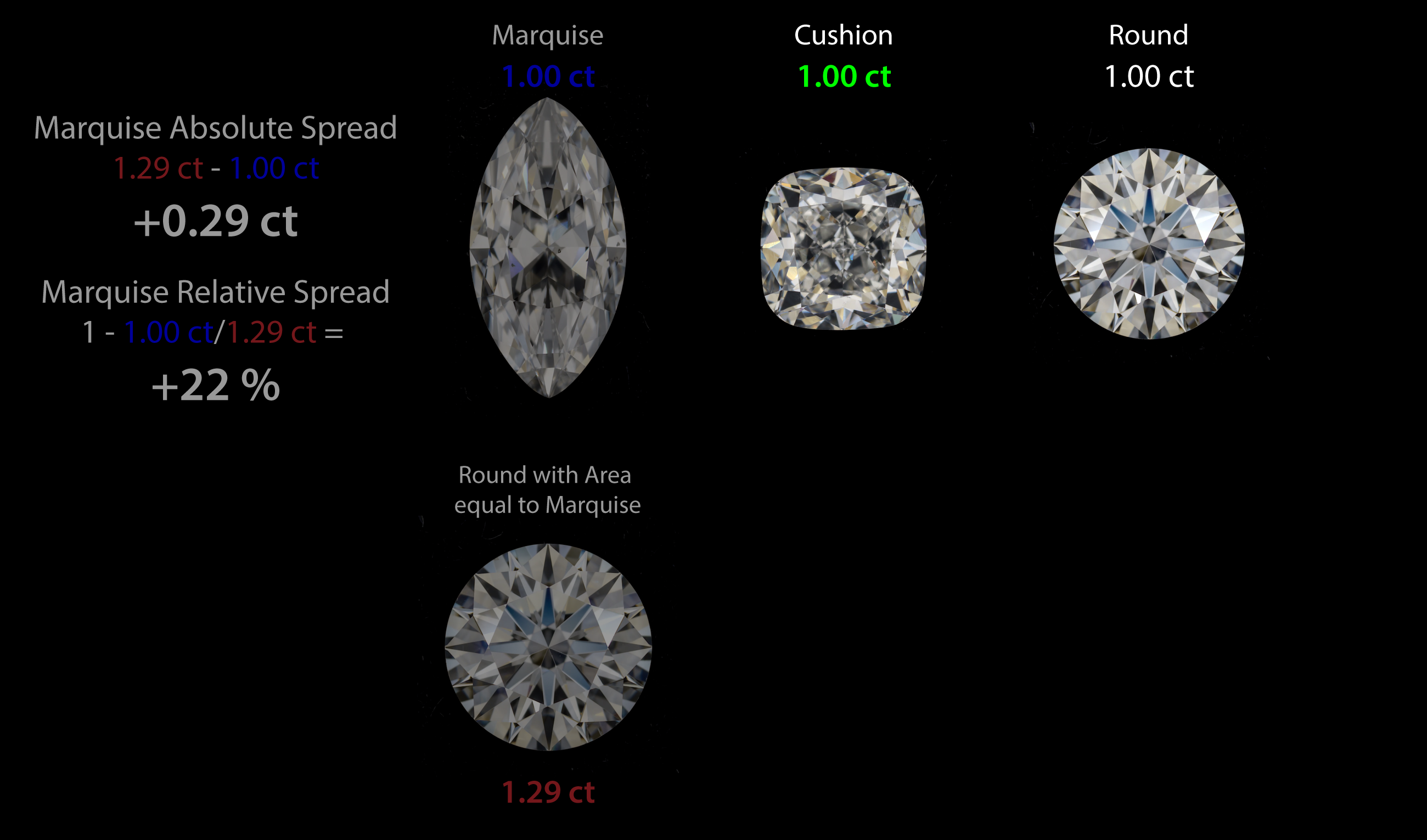
Apparent size of a 1 ct Marquise
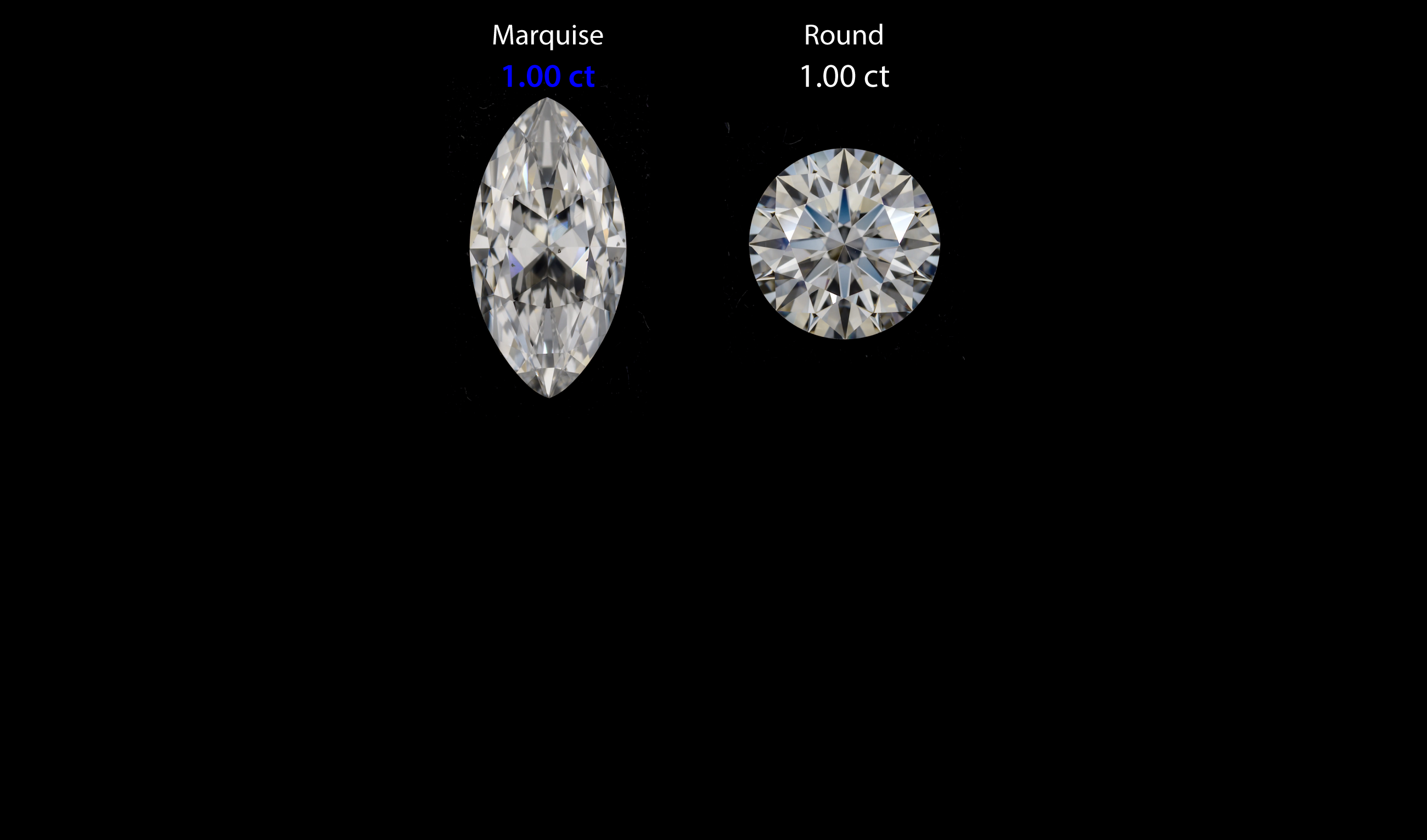
A round with the same face-up area as this Marquise weighs 1.29 ct.
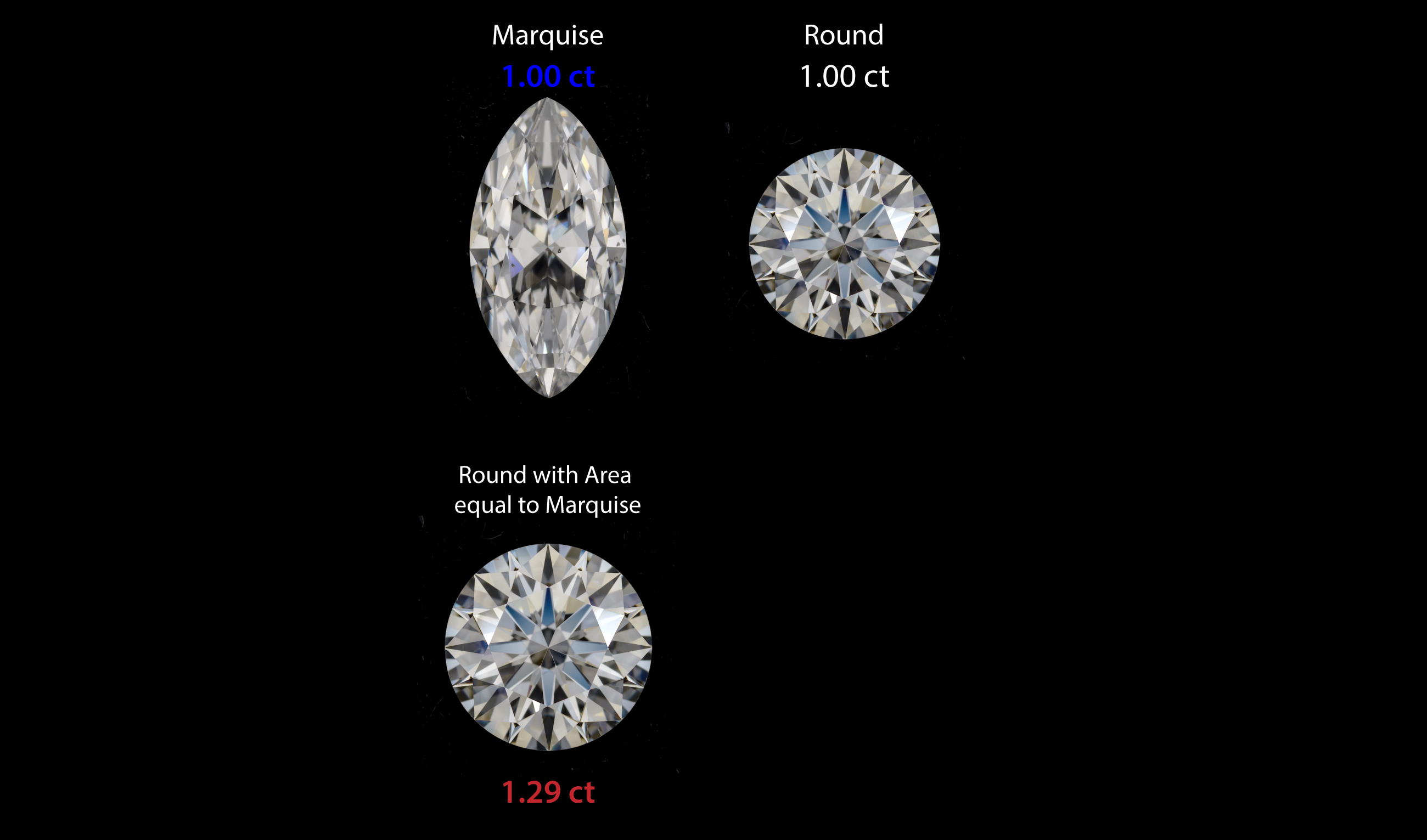
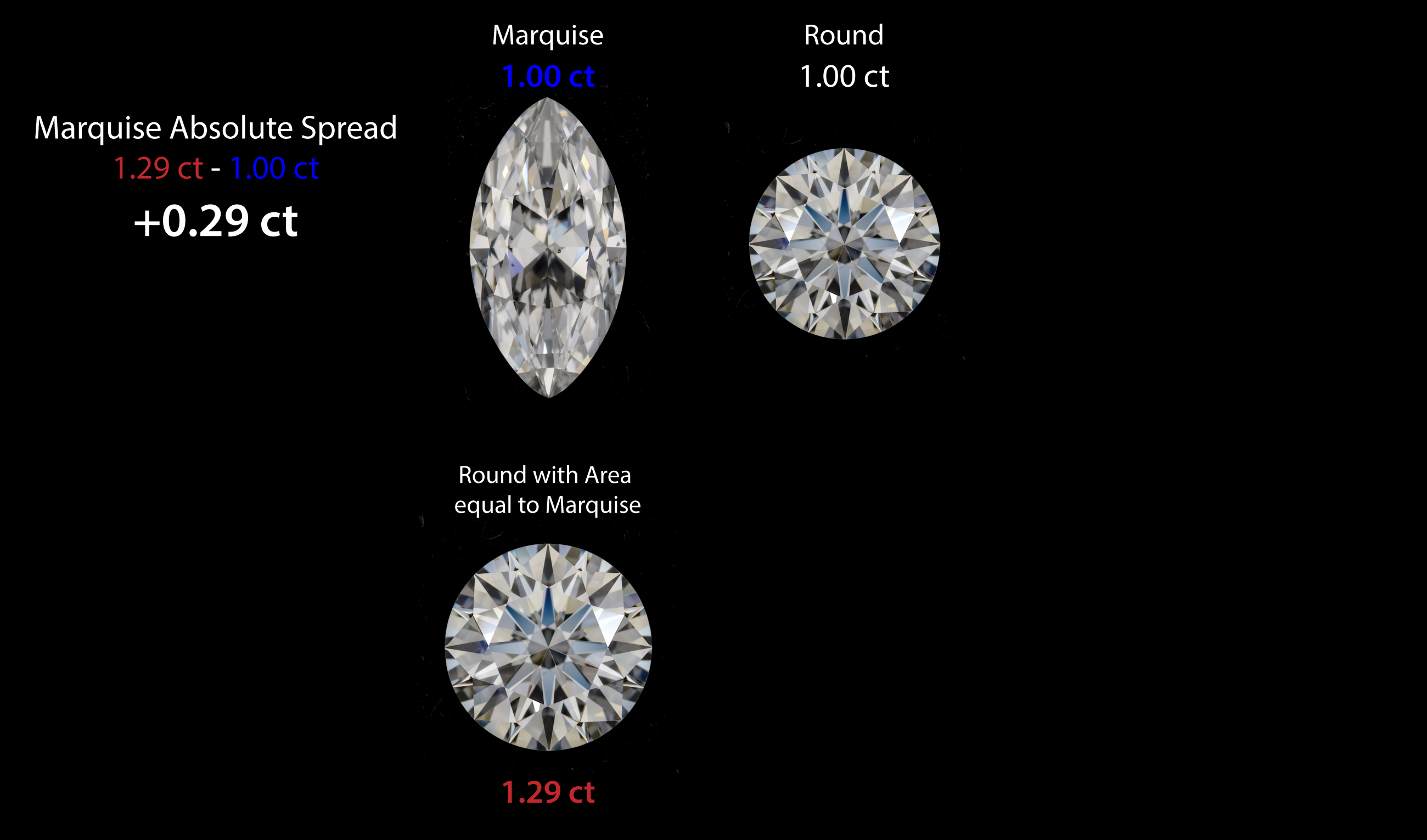
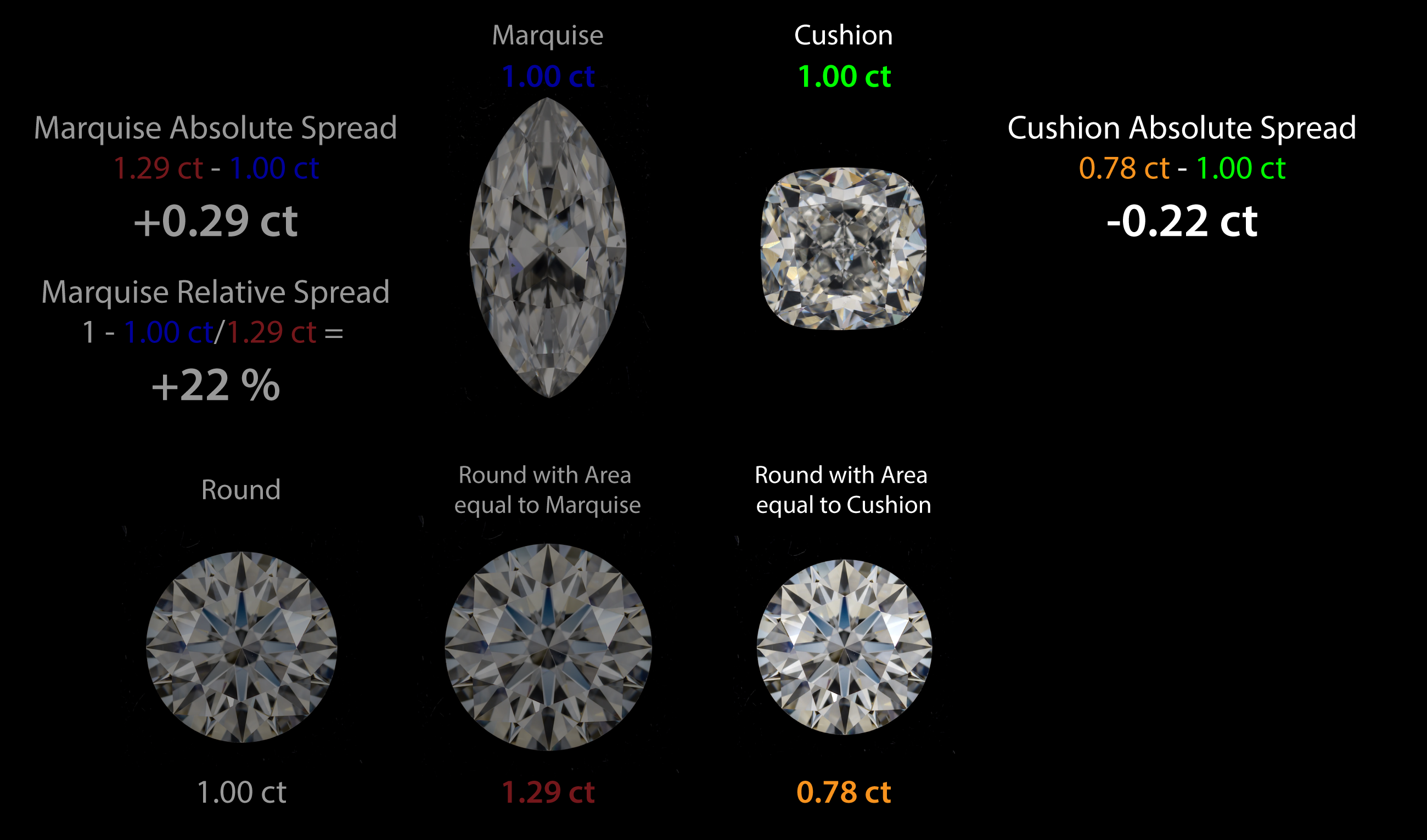
Absolute apparent size (spread) shows how much heavier or lighter a round with the same face-up area is.
A round with the same face-up area is 0.29 ct heavier than this 1.0 ct Marquise.
The absolute apparent size depends on the weight of the diamond.
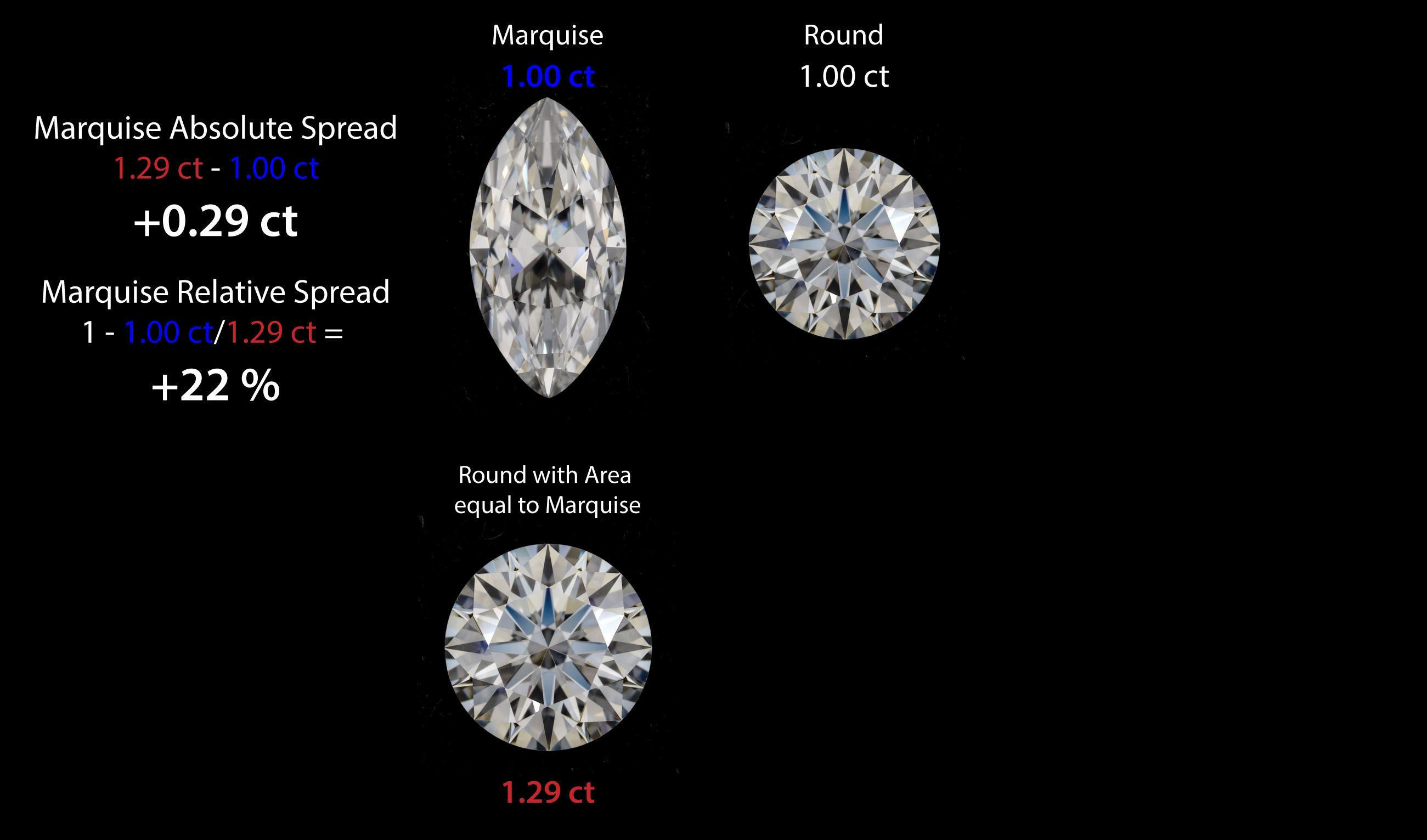
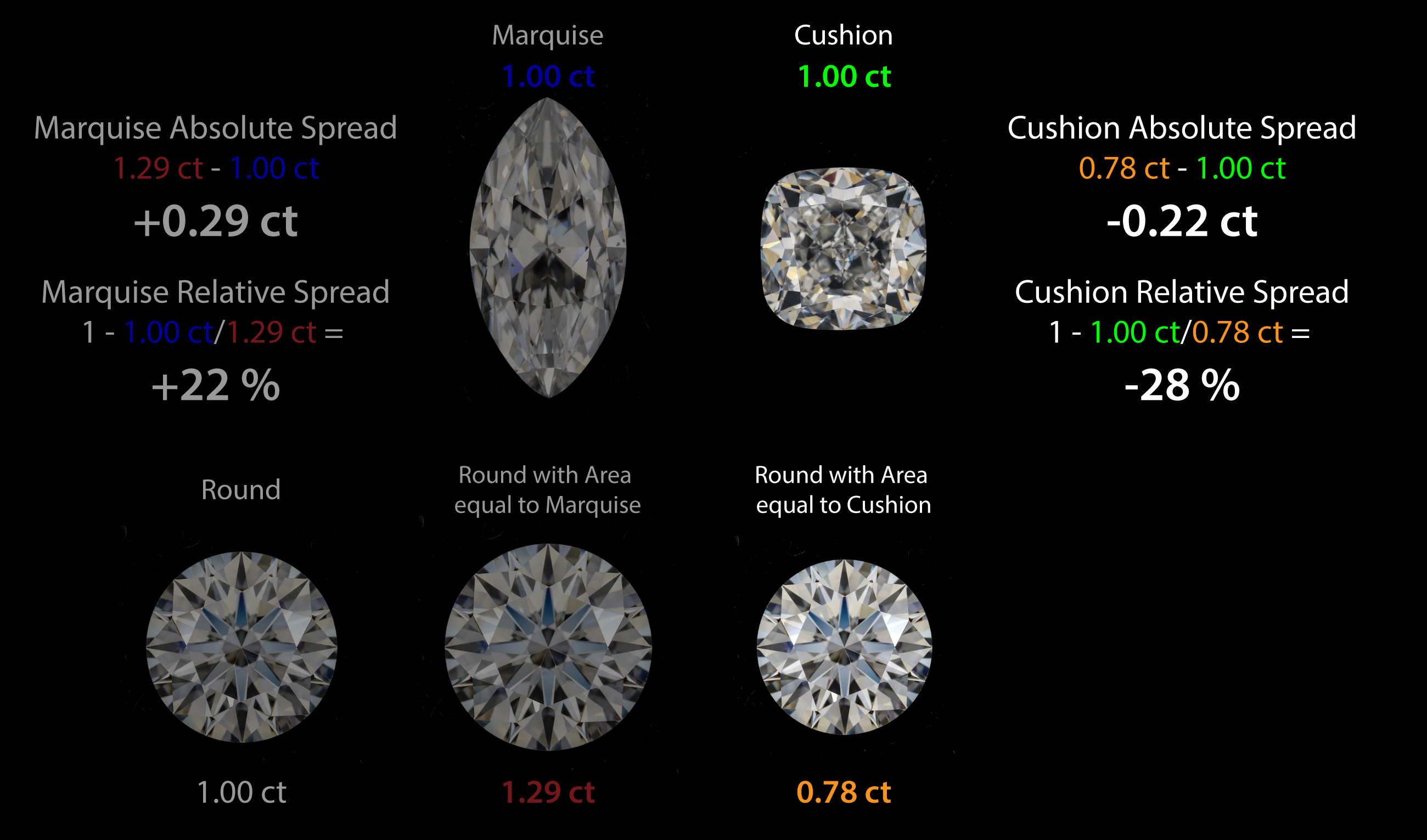
Relative apparent size shows the weight ratio between the diamond and a round with the same face-up area.
A round with the same face-up area is 22% heavier than this Marquise.
The relative apparent size does not depend on the weight of the diamond.
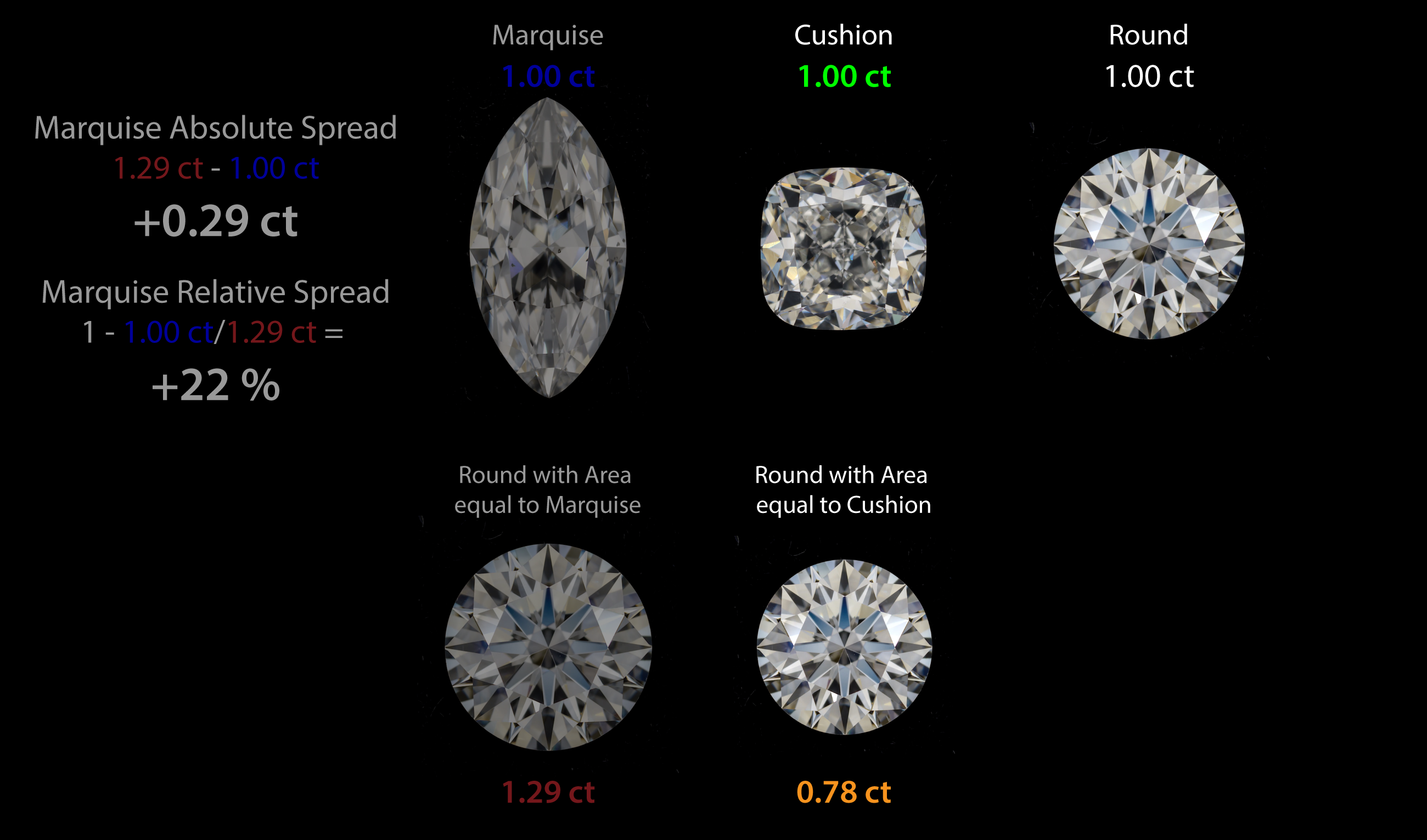
Apparent size of a 1 ct Cushion
A round with the same face-up area as this Cushion weighs 0.78 ct.
In practice
Use the relative apparent size to compare diamonds of different weights, because it does not depend on weight.
See also Optical Performance Evaluation.