 Documentation
Ray Path in Round Diamond
How pavilion angle moves the ray path, and what that does to a round's performance.
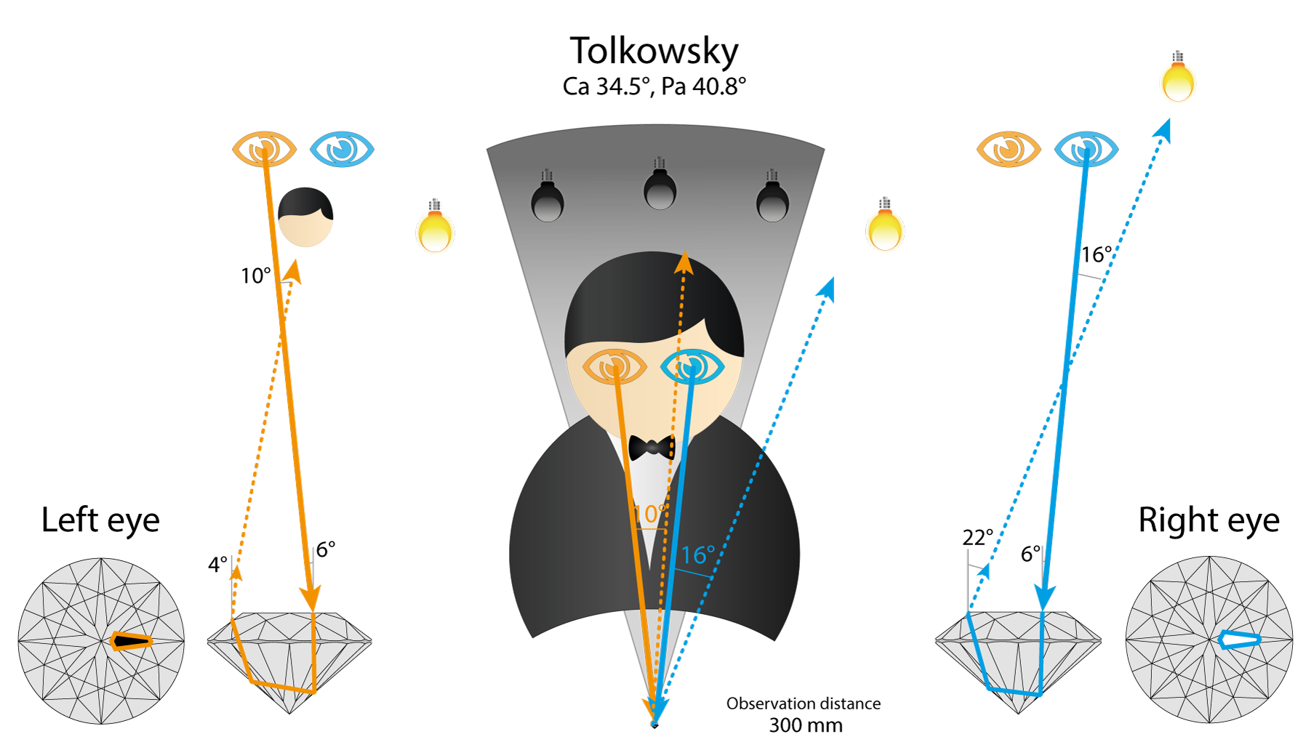
In a Tolkowsky round, the two eyes of the observer see different images in the same facet, and this contrast creates brilliance. A shallower or deeper pavilion makes both eyes see the same image, so the contrast is lost.
This article uses these terms:
- Pa is the pavilion angle.
- Ca is the crown angle.
- Tolkowsky round is the reference round diamond with Ca 34.5° and Pa 40.8°.
- Arrows are the arrow-shaped facet reflections under the table.
- Binocular rivalry happens when the two eyes see very different images in the same area of the diamond.
How a Tolkowsky round works
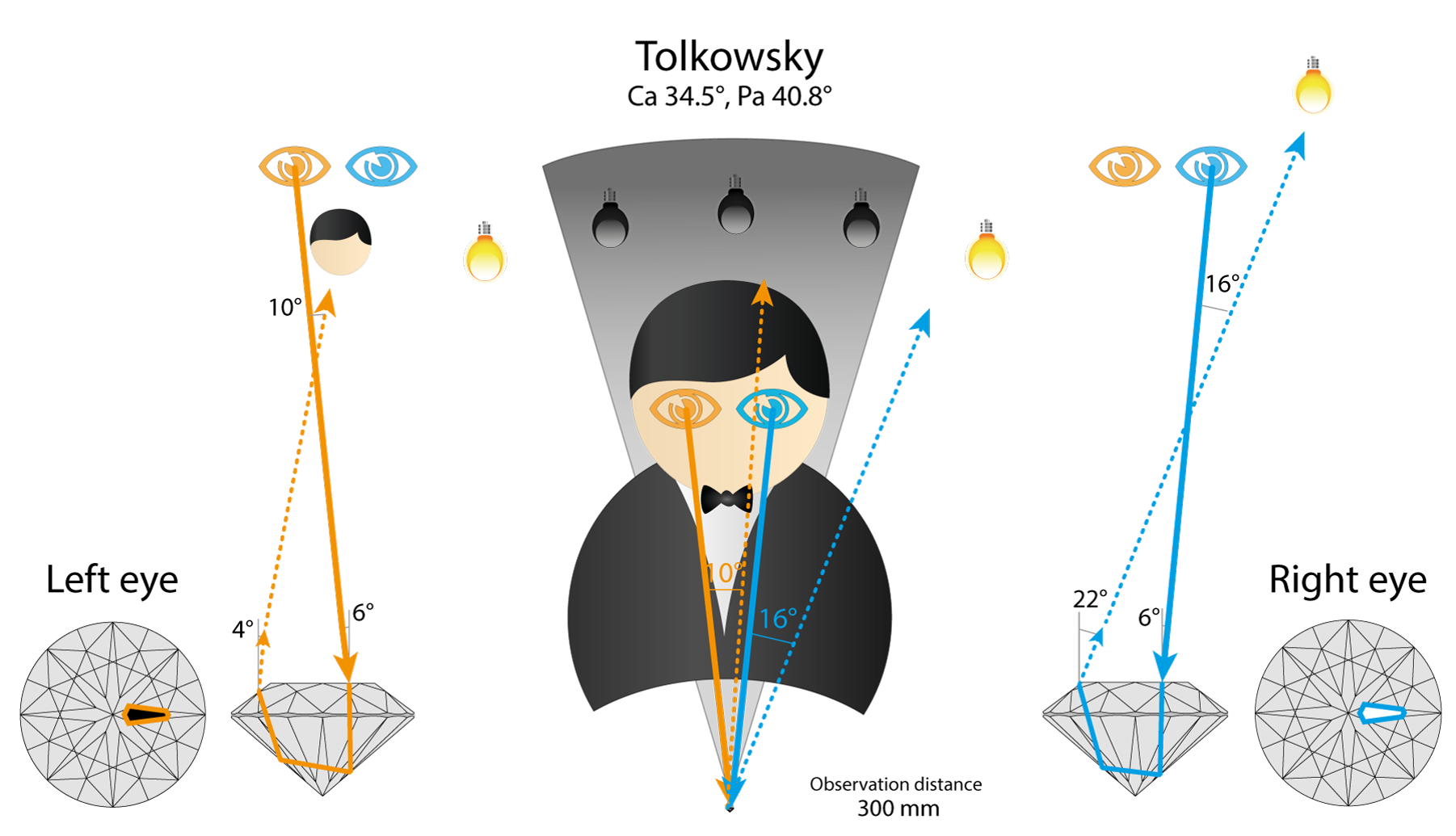
Take one arrow facet under the table. The right eye sees a white flash: the facet reflects the light source on the right of the observer.
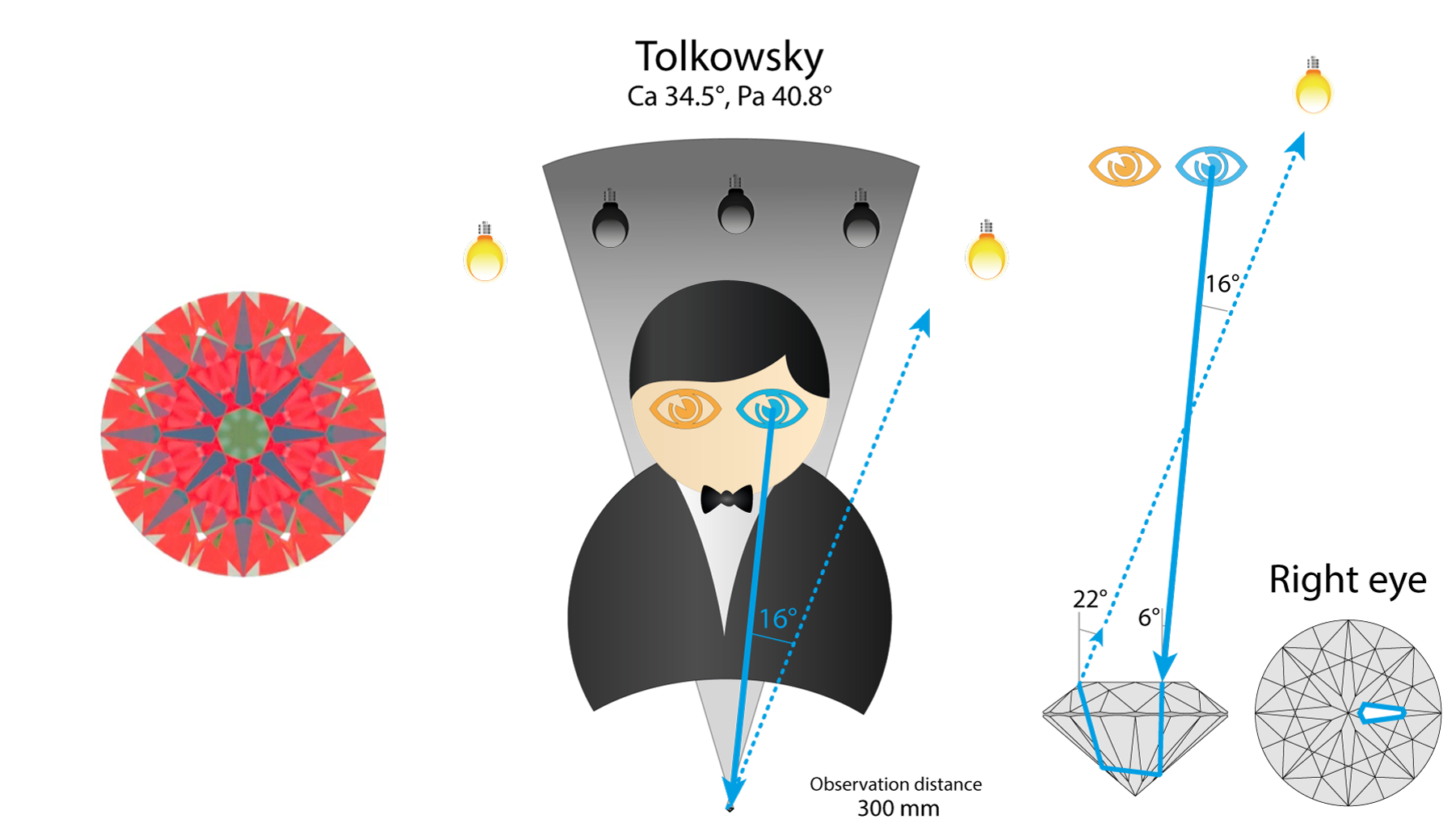
For the left eye, the same area is black, because the left eye sees the reflection of the observer's head.
So in one area of space, the two eyes see very different, contradictory images:
- a white reflection of the light source;
- a black reflection of the head.
The difference in signal intensity is more than 1000 times.
Rounds with different pavilion angles
What happens if we decrease or increase the pavilion angle? We compare the Tolkowsky round with two shallower and two deeper diamonds.
| Diamond | Arrows | Proportions |
|---|---|---|
| Very Shallow | 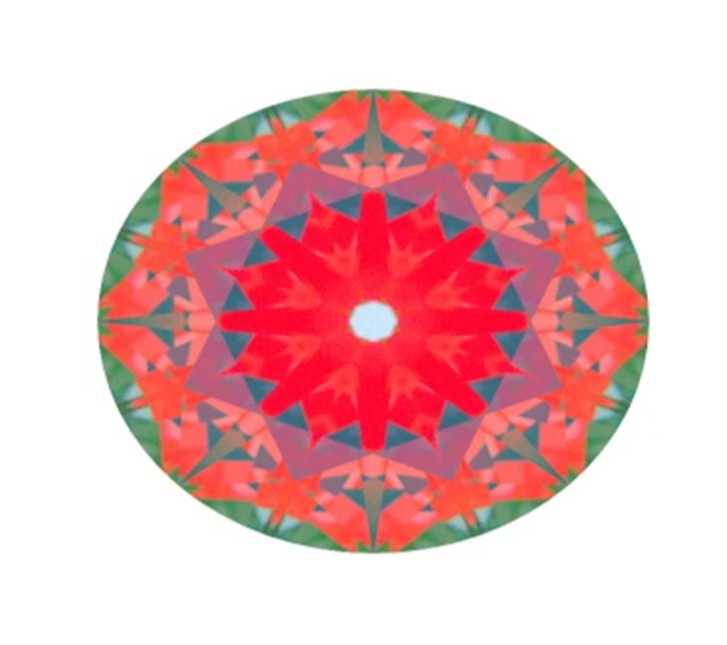 |
Ca 25, Pa 39 |
| Shallow | 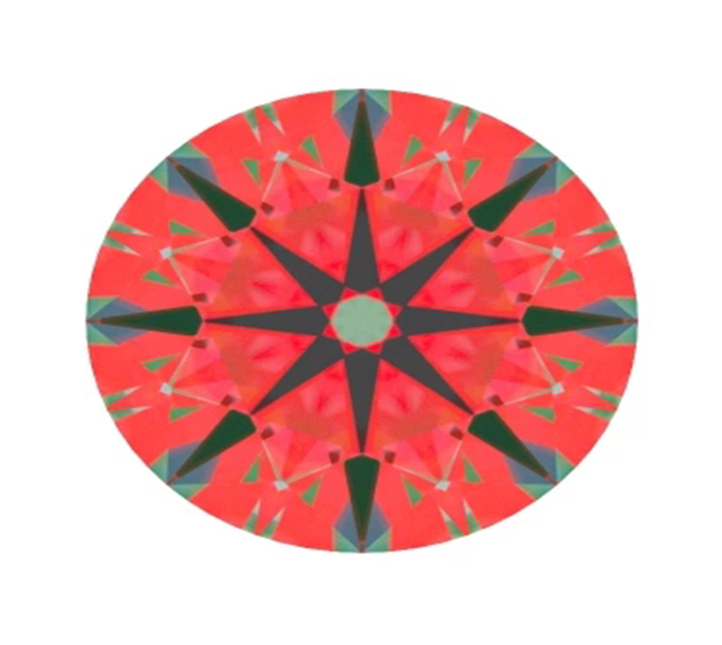 |
Ca 34.5, Pa 39.6 |
| Tolkowsky | 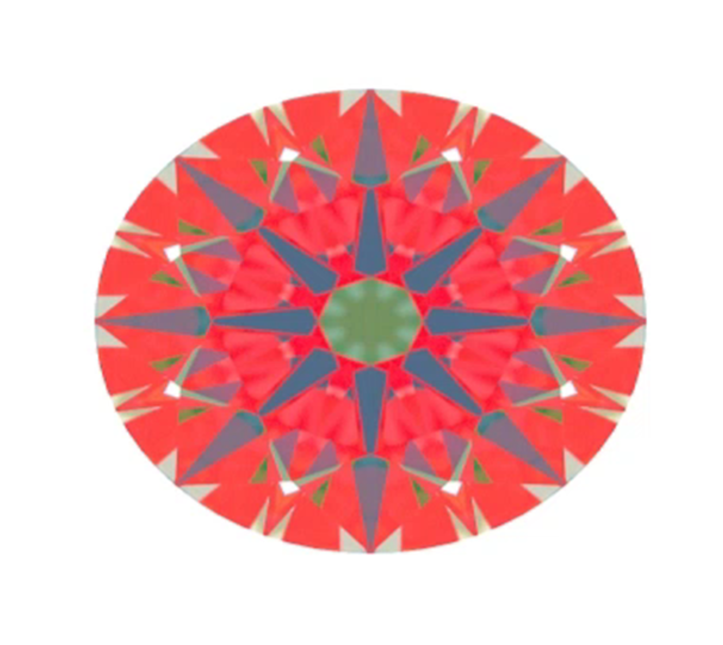 |
Ca 34.5, Pa 40.8 |
| Deep | 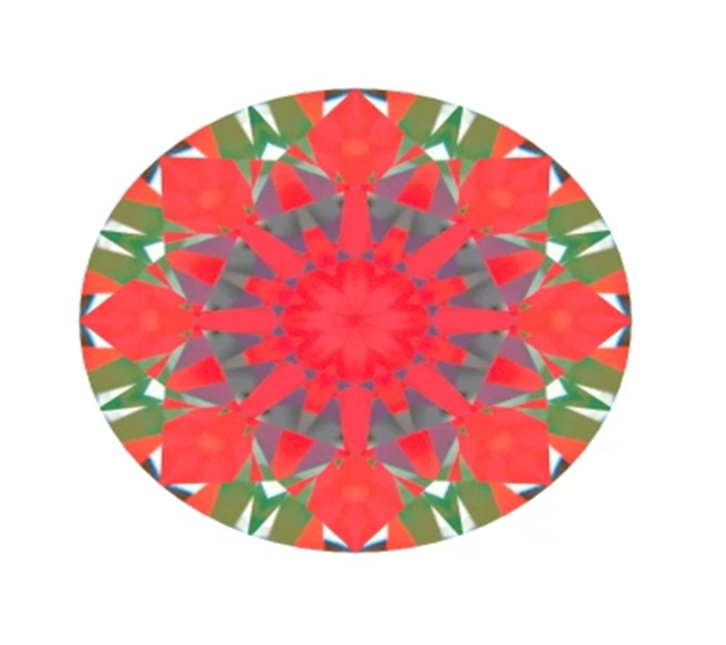 |
Ca 34.5, Pa 41.8 |
| “Nail Head” | 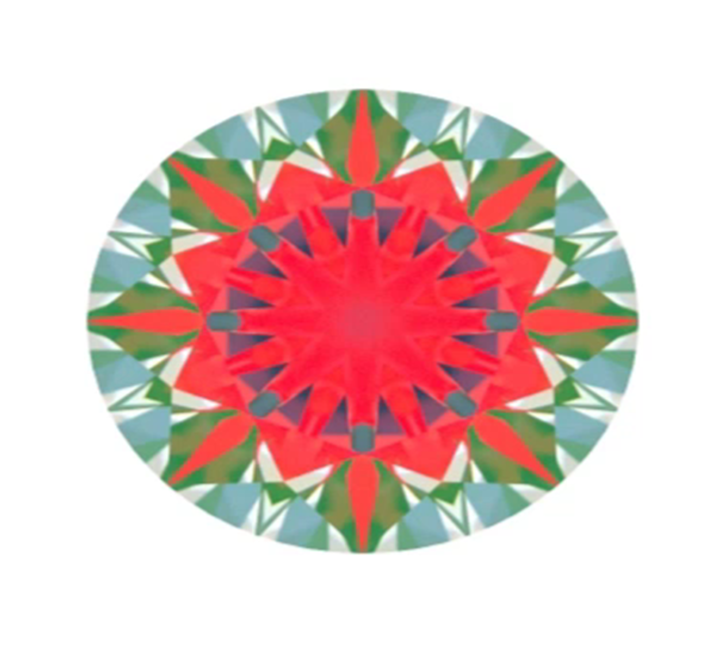 |
Ca 34.5, Pa 43.6 |
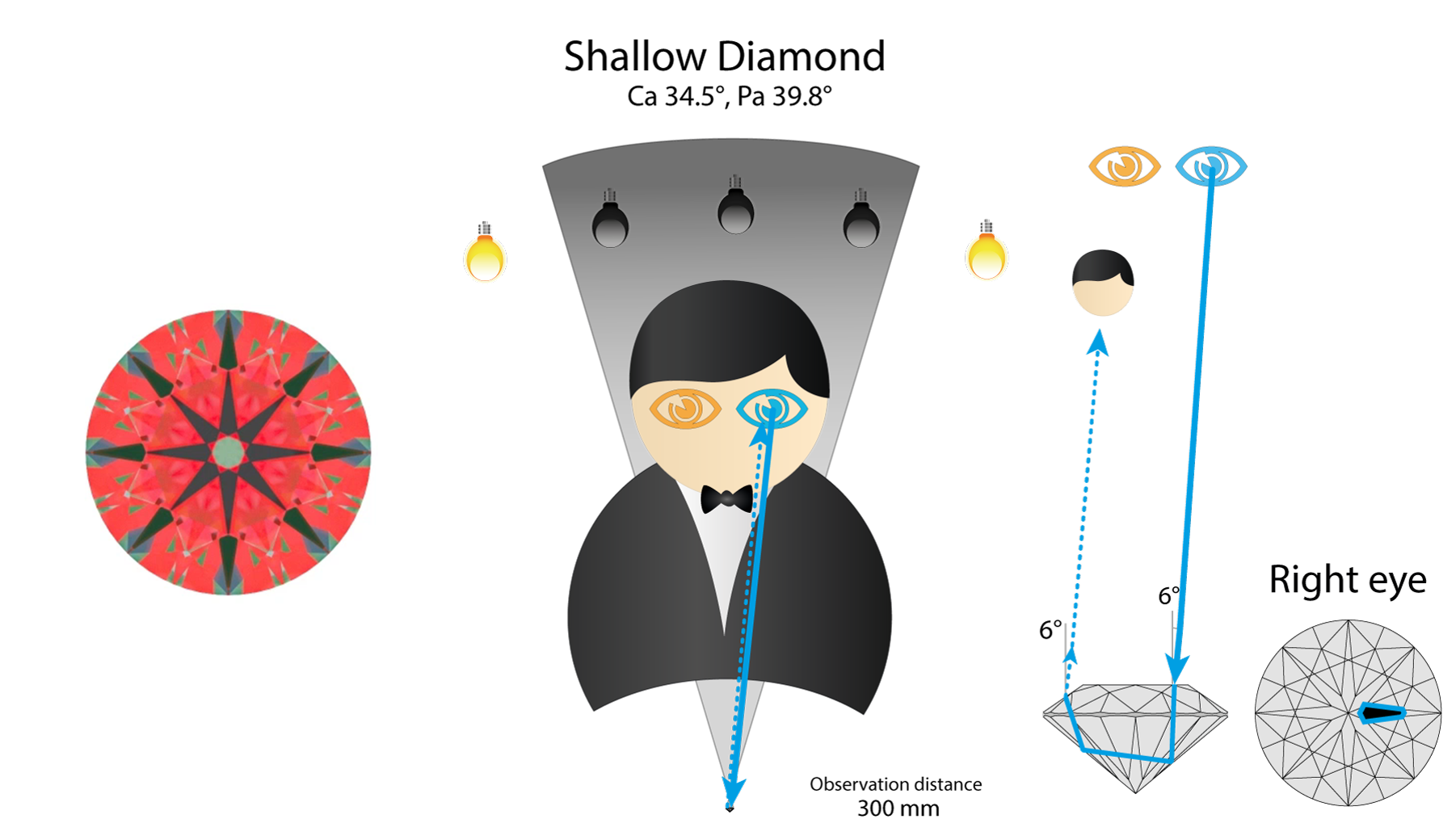
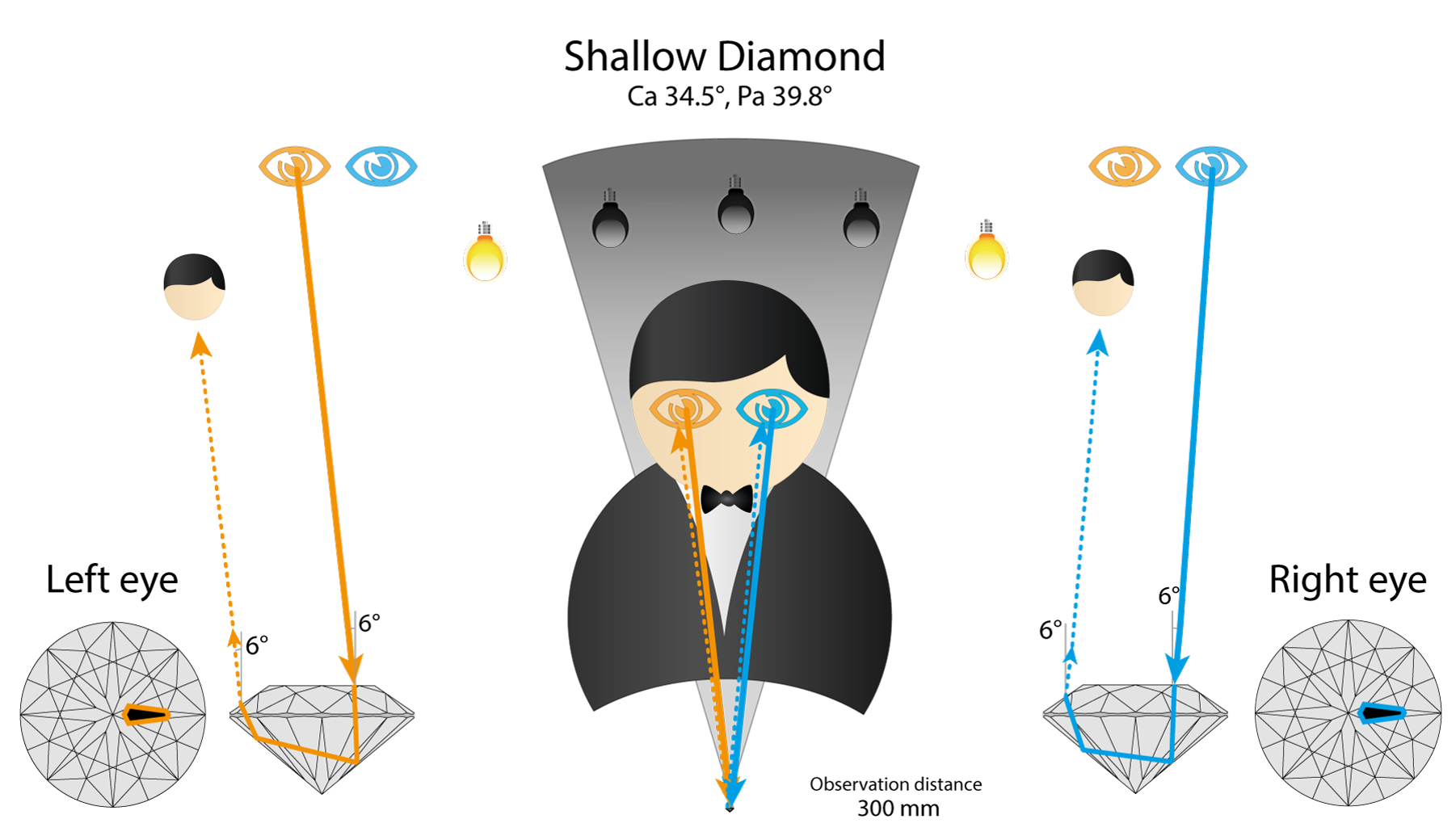
Shallow diamond
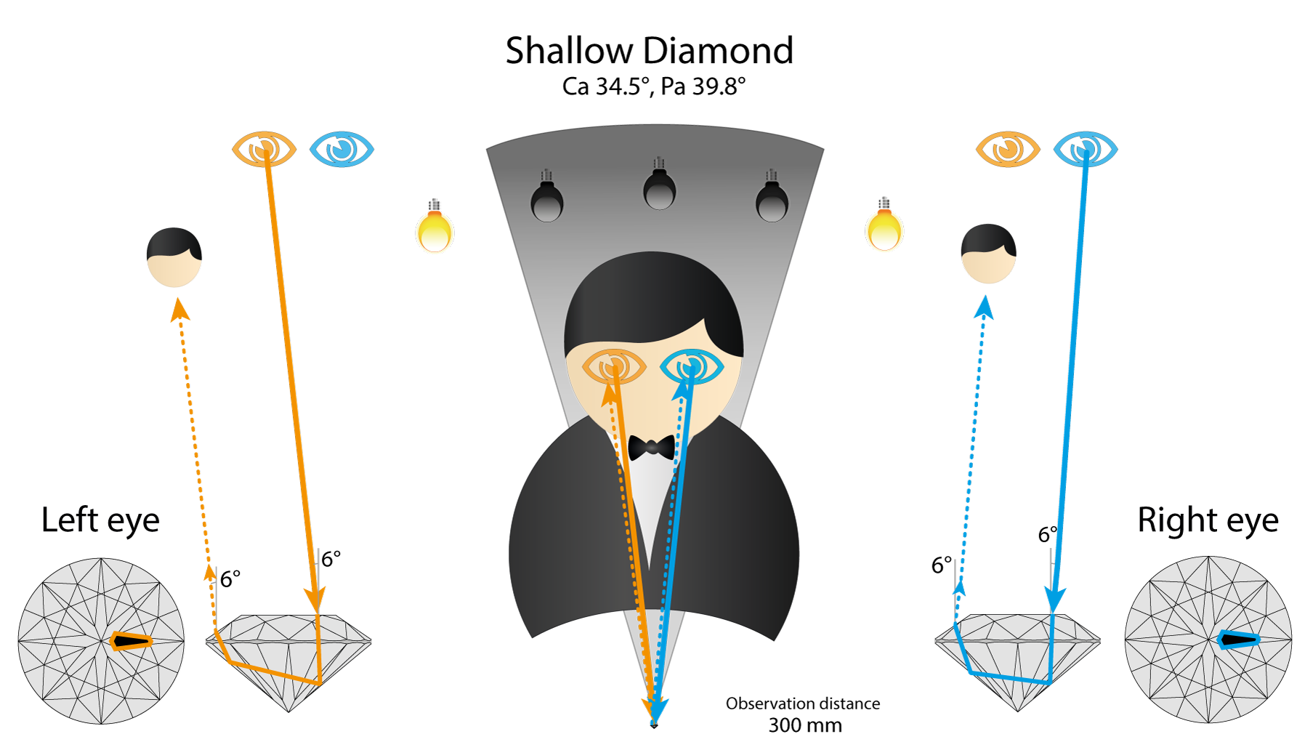
The shallow diamond returns the ray from the right eye directly to the observer's head, so the marked arrow is black.
The left eye also sees black, because it sees the reflection of the observer's body. Both eyes see black and see the reflection of the observer's head. This is the worst case. The arrows in such a diamond are completely black, because a light source cannot be in the area of the observer's head.
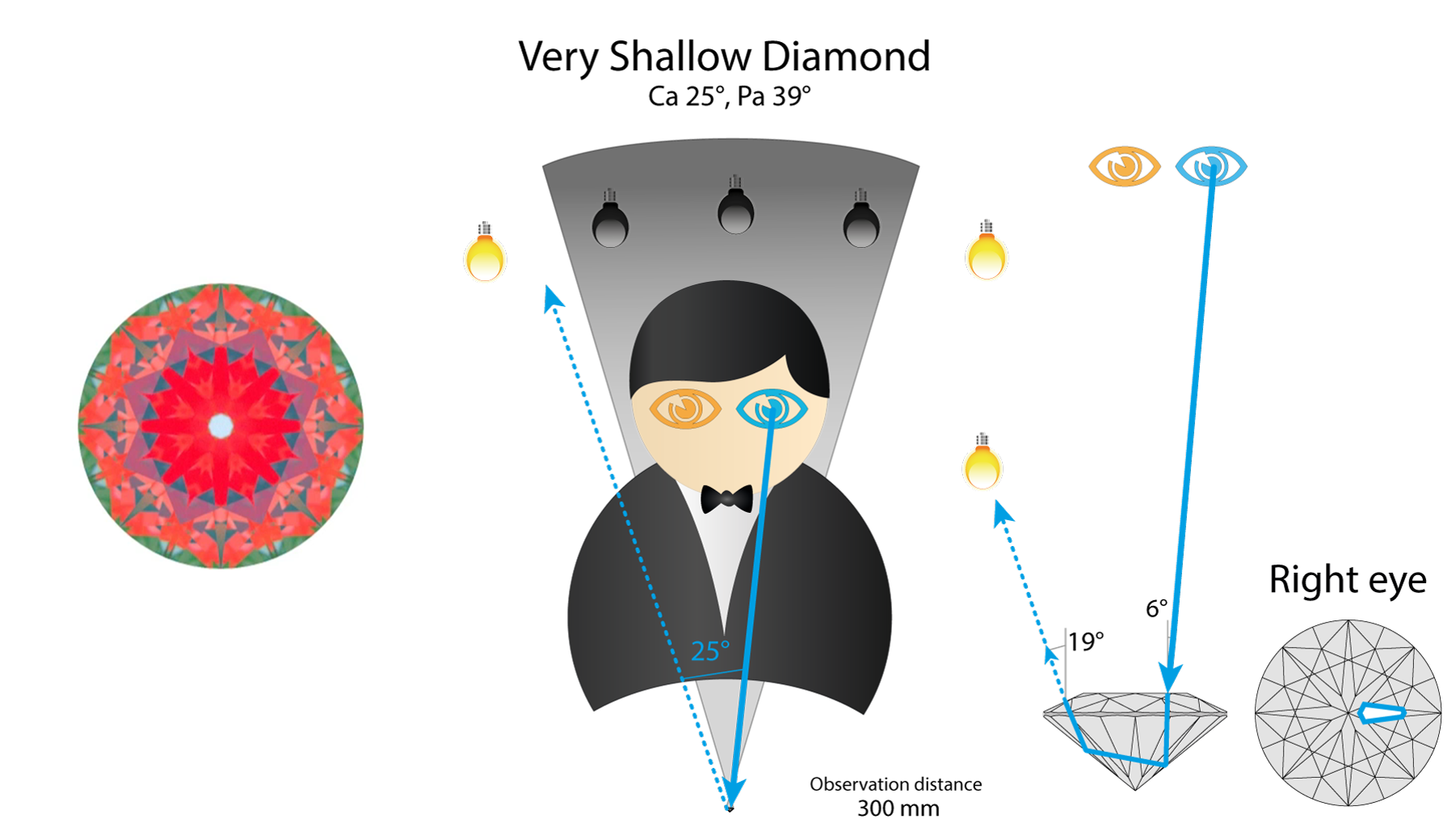
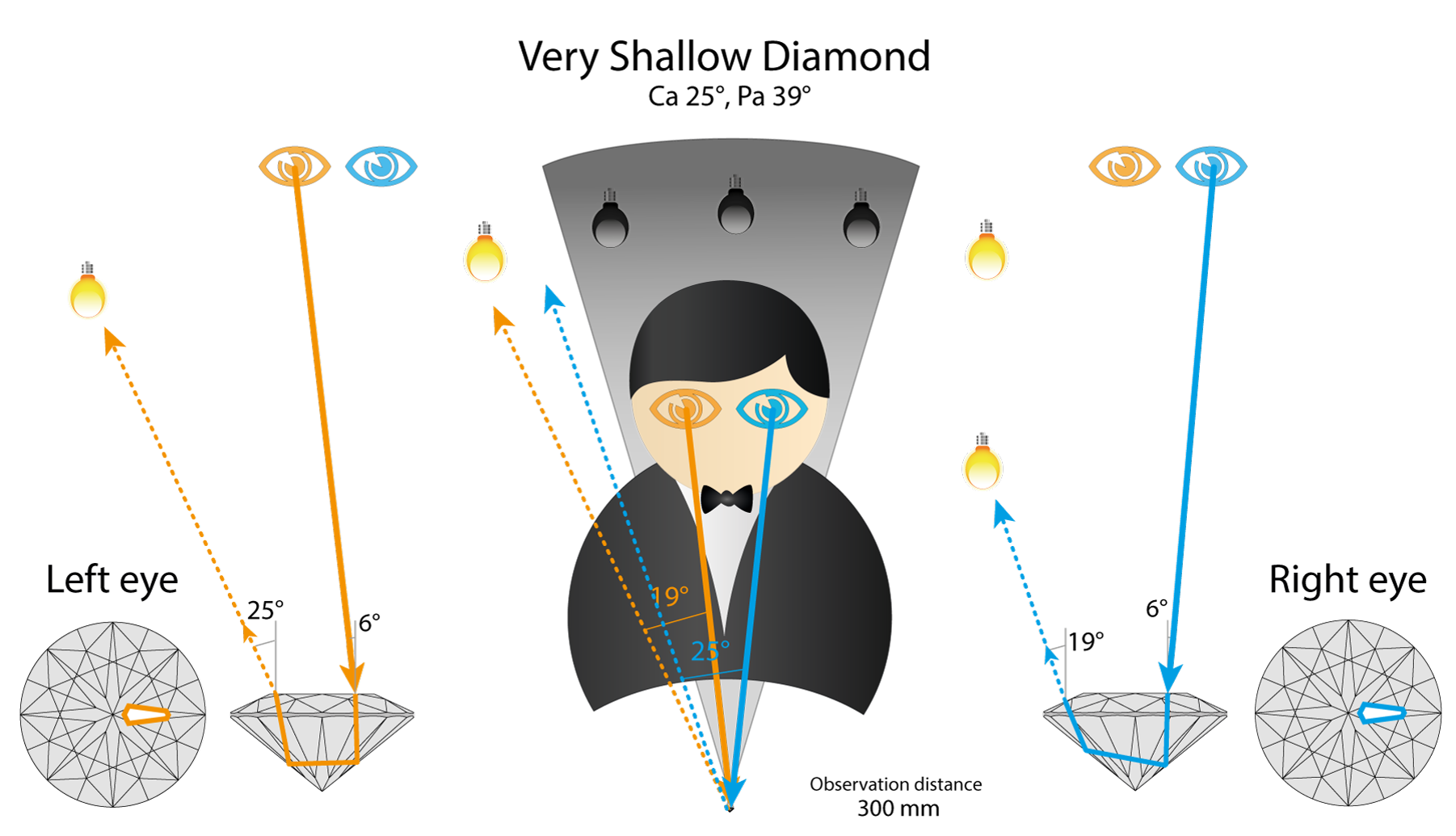
Very shallow diamond
The very shallow diamond has a different ray path. It reflects a light source on the left side of the observer, which is different from the Tolkowsky round.
The left eye also sees a light source on the left side of the observer. In the very shallow diamond, the selected facet is white for both eyes. So the diamond has high objective brightness. But it has little contrast, and so it loses brilliance.
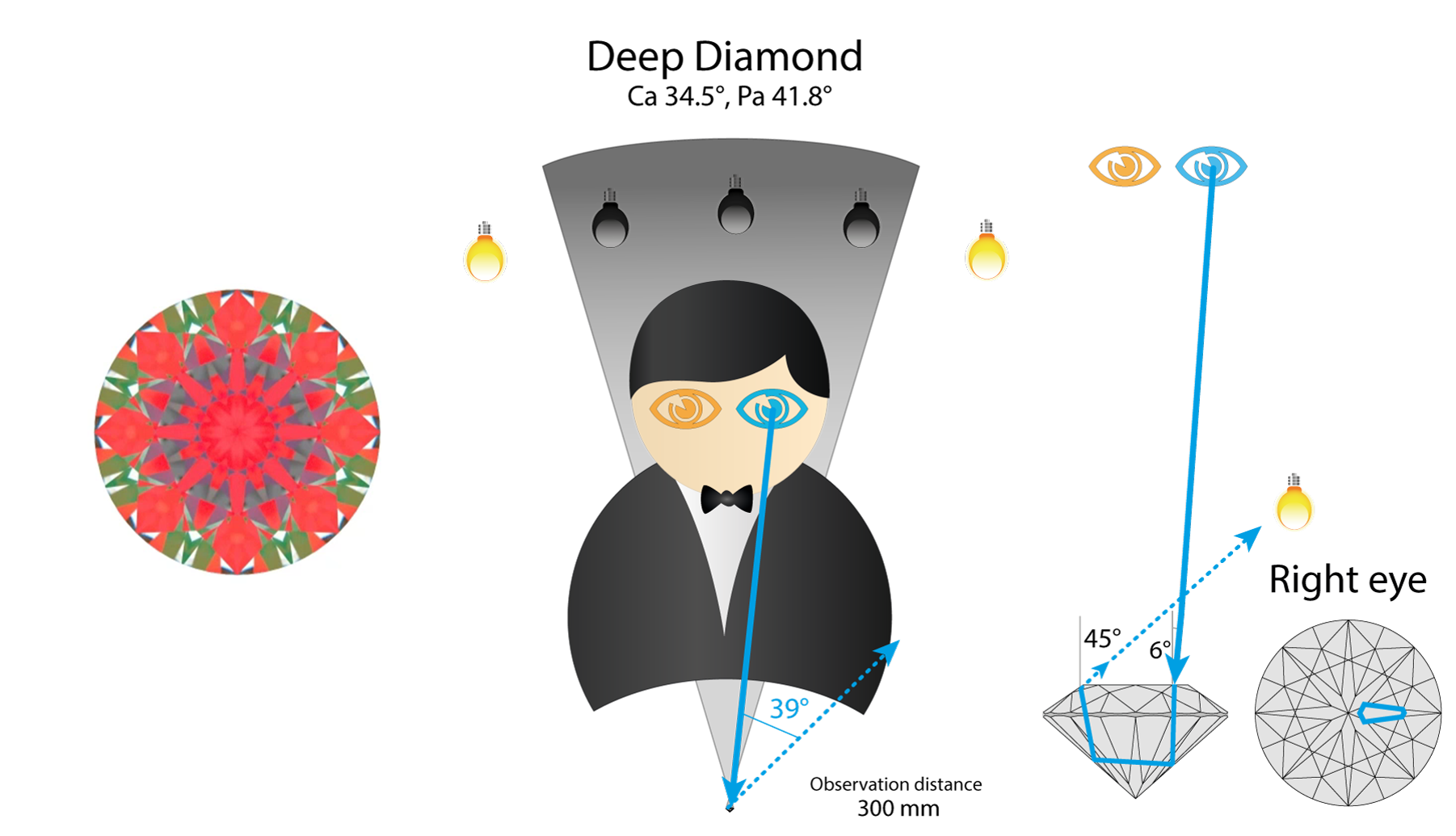
Deep diamond
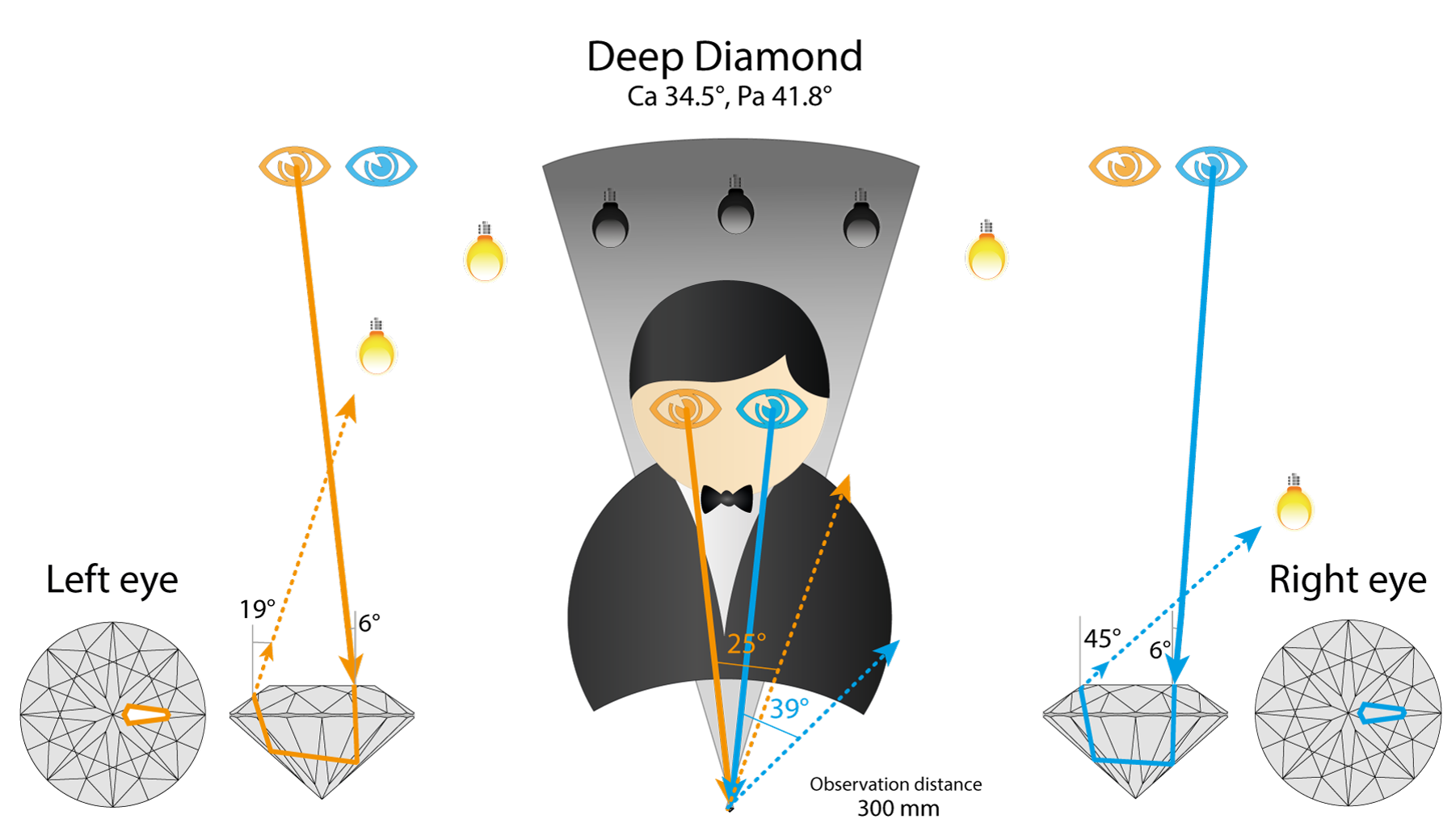
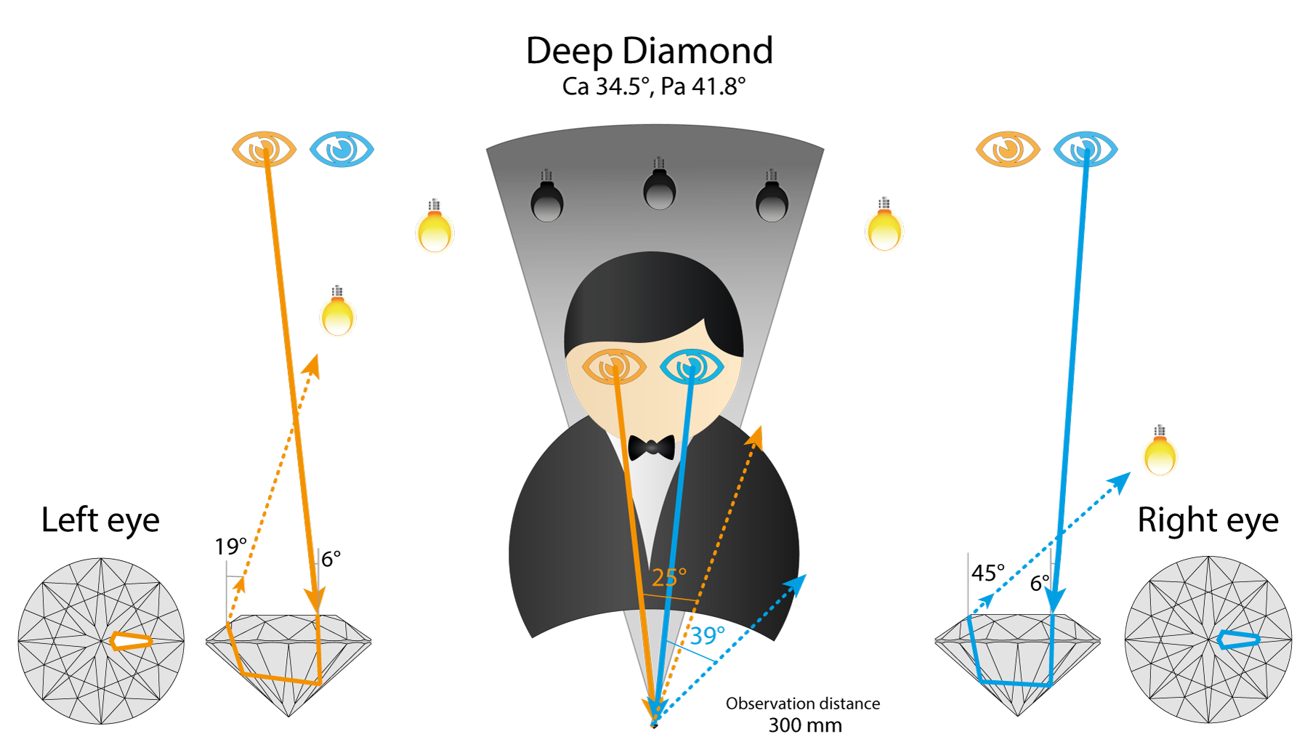
The deep diamond acts close to the Tolkowsky round, but it reflects the light source from a much steeper angle.
So in the deep diamond, the selected facet is white for both eyes, as in the very shallow diamond.
“Nail Head” diamond
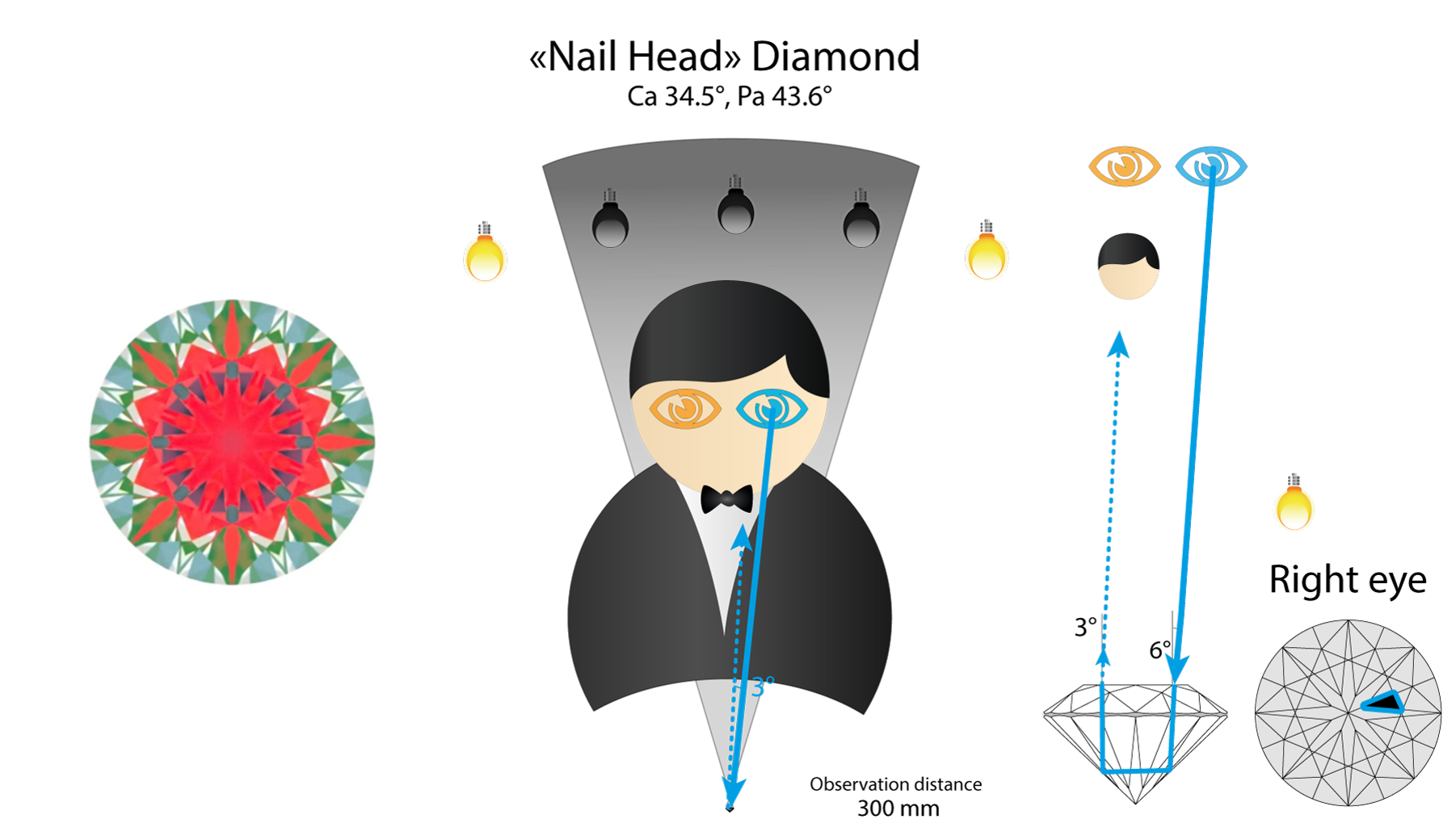
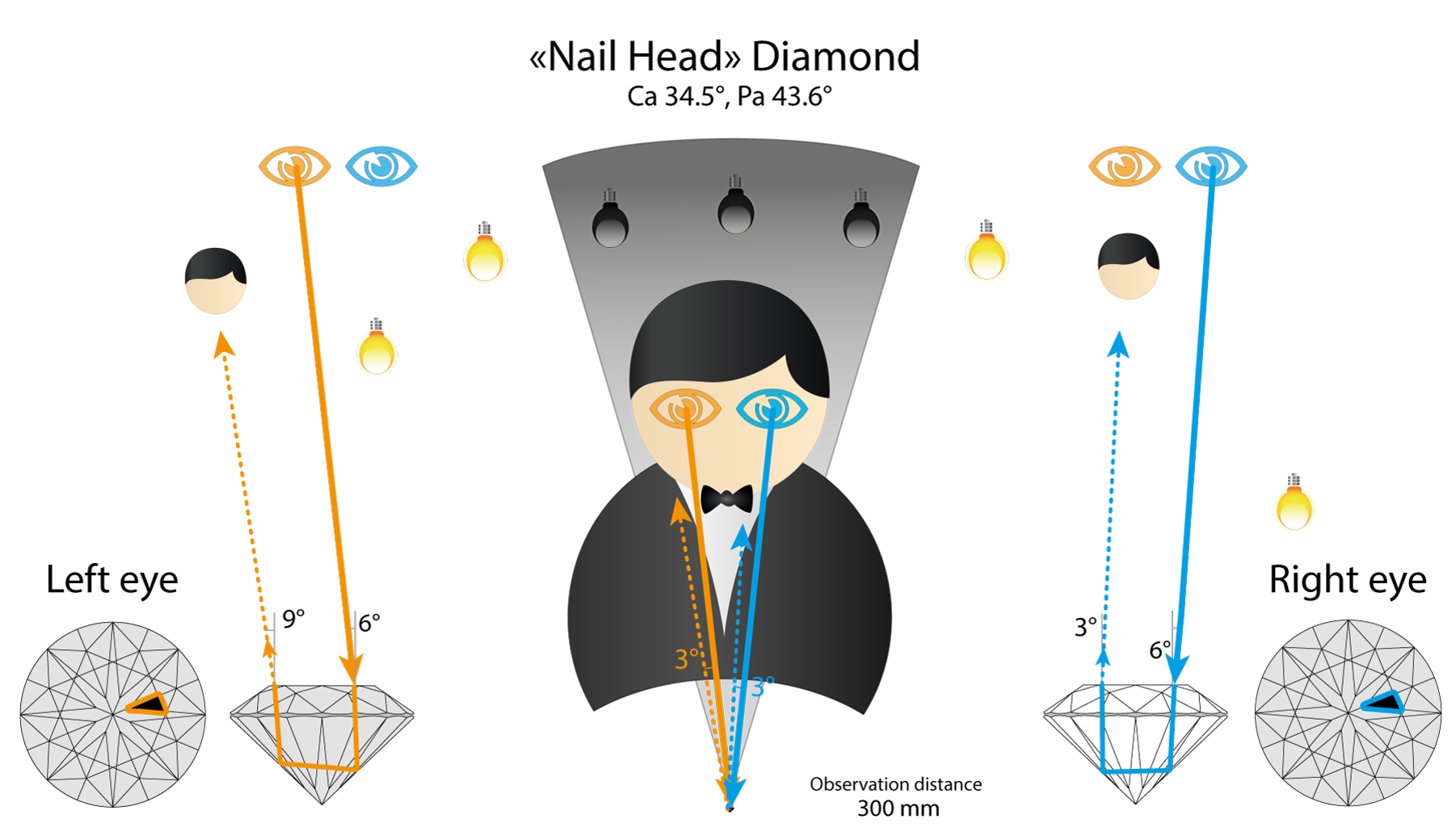
The “Nail Head” diamond gives total internal reflection and sends the light to the observer's head.
Summary
When Pa moves away from the Tolkowsky value, the binocular rivalry of the round cut decreases. At Pa 39.8, both eyes see black. At Pa 41.8, both eyes see white.
Tilting the diamond 10° ± 5° from face-up
Facet speed during tilting is another important feature. It is related to temporal contrast.
When a consumer rocks the diamond while looking at it, the ray path of each facet changes, as the video shows. The diamond scans the space around it and reflects light sources to the observer.
Ray tilt, from left to right: 0.1°, 1.7°, 4.3°, 12.8°, 0.7°.
In this demonstration, we tilt the diamond by 10 degrees. The very shallow diamond and the “Nail Head” diamond reflect the same area of space during this rotation. So in these diamonds the reflection of the observer's head is very stable. Even during rotation, the arrows stay black and create a “dead zones” effect: areas in the diamond that always stay black. This gives these diamonds very bad performance.
The ray path angle of the shallow diamond changes by 1.7 degrees. The Tolkowsky round shows a ray angle change of 4.3 degrees. The deep diamond has the highest value of the selected diamonds.
In practice
- A high flash speed while the diamond moves is good, because the diamond produces flashes more often.
- Dead zones, areas that stay black during rotation, give very bad performance.
- For how crown and pavilion angles work together, see Sweet Line in Round Diamonds.